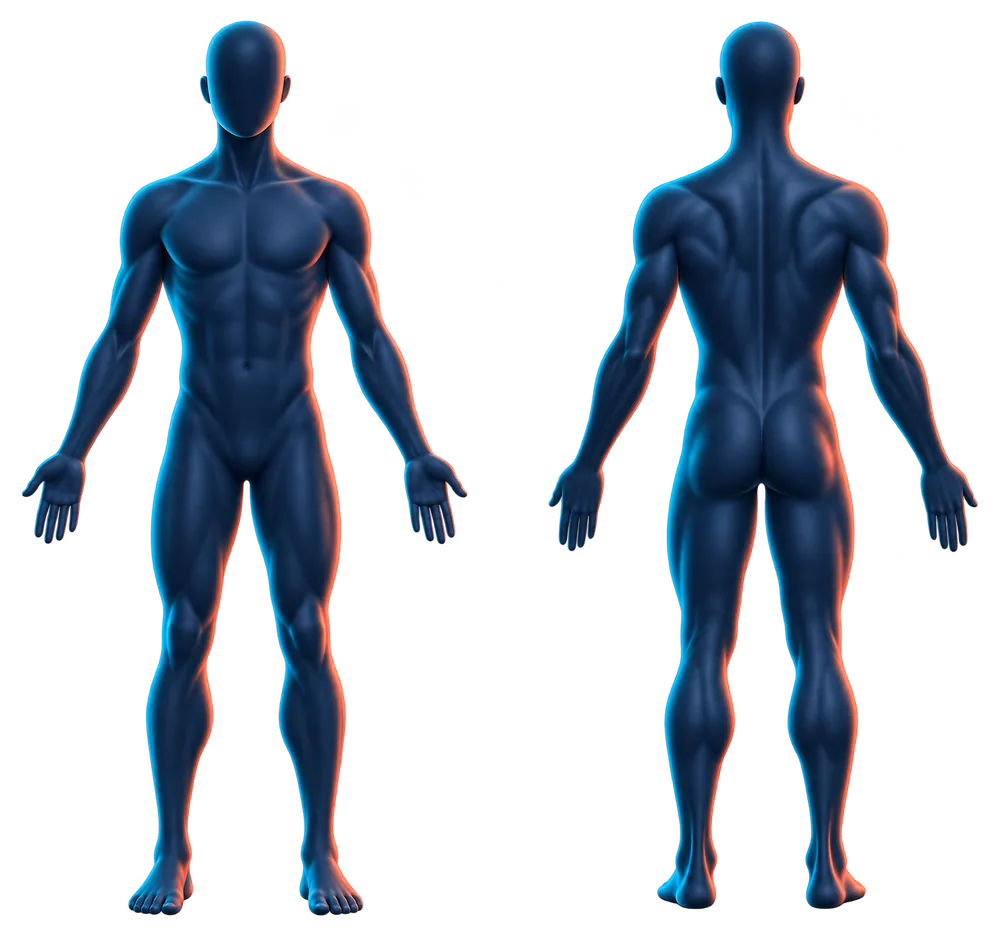
The pain that won't let up
Morning, noon and night. It's there on the stairs, at work, and when it's time to sleep.
Shockwave therapy · Regenerative care
Pain that won't quit. Life on hold. The fear of surgery, or one more shot that wears off. Shockwave therapy is a non-invasive approach that uses quick pulses of sound energy to wake up the body's own repair response, instead of just masking symptoms. No incisions. No needles.
A short film
A one-minute look at how shockwave was discovered, and how researchers think it helps the body repair. Press play to watch with sound.
Why people come looking
Morning, noon and night. It's there on the stairs, at work, and when it's time to sleep.
The morning walk. The golf game. The garden. Getting down on the floor with the grandkids.
Nobody wants an operation, weeks of recovery, or another shot if there's a gentler way to start.
The quiet fear that this is just how it's going to be from now on.
Here's the hopeful part. Medicine is moving beyond covering up symptoms and toward helping the body repair itself. Shockwave therapy is part of that shift, and a visit is the way to find out if it can help.
Regenerative, not a cover-up
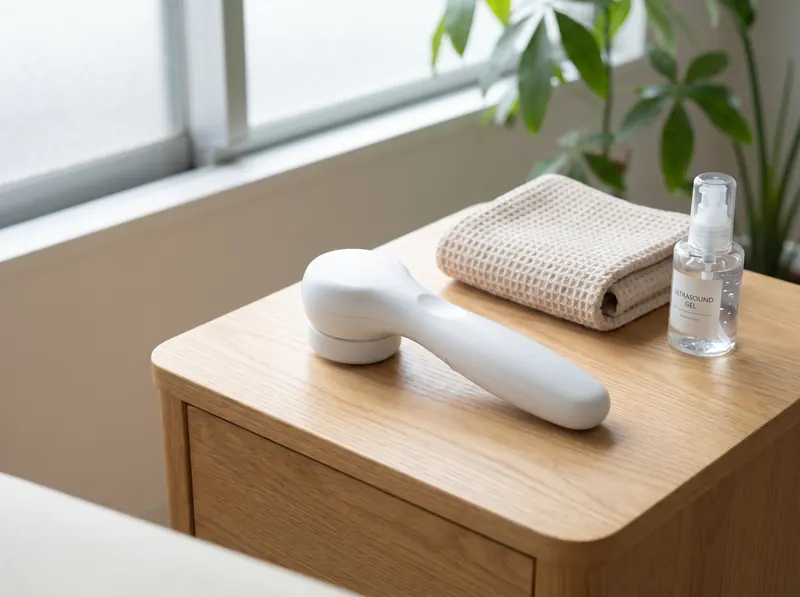
A provider uses a handheld applicator and a little gel to send quick pulses of sound energy through the skin into sore muscle, tendon and ligament tissue. Researchers think cells sense those pulses and answer with signals linked to new blood flow, tissue repair and pain relief. (Wuerfel et al., Biomedicines 2022 (opens in new tab); Xue et al., BMC Musculoskelet Disord 2024 (opens in new tab))


A different path than cortisone
Cortisone shots can calm pain fast. But there's growing recognition that the relief is often temporary, and that repeated shots can weaken the very tissue they're meant to help.
Shockwave takes the opposite approach: it works with the body's repair response. In a review of 16 trials, shockwave beat steroid shots for heel pain and function at 3 and 6 months. (Systematic review, Clin Rehabil 2024 (opens in new tab))
Where shockwave helps
Shockwave isn't just for one or two conditions. Providers use it for a wide range of non-surgical muscle, tendon, ligament and joint-related pain throughout the body. The idea is the same everywhere: overuse, old injuries and the years can leave tissue stiff, thickened and sore, and slow to heal on its own. Shockwave delivers a mechanical nudge to the painful spot and the connective tissue around it, and in lab and animal studies it has been linked to new blood-vessel signals, growth factors and better tendon gliding. (Wuerfel et al., Biomedicines 2022 (opens in new tab)) People hope for relief and a return to the activities they love — and a visit is the way to find out if it could help.
How it works
The numbers
What major medical centers say
“Using a handheld device, we’ll send small shock waves of energy to your soft tissues. This can decrease pain and help heal inflamed tendons (tendinopathy).”
“This treatment uses sound waves to increase the blood flow to the plantar fascia to help improve the healing process.”
Quoted from public patient-education pages; these organizations are not affiliated with Ripplewise.
Conditions it helps with
Here's how shockwave is being used, and what studies have found. Every highlight links to the study behind it.

Across 16 randomized trials, shockwave beat steroid injections for heel pain and foot function at 3 and 6 months.
Source: Systematic review, Clin Rehabil 2024 (opens in new tab); Lippi et al., Eur J Phys Rehabil Med 2024 (opens in new tab)

In a double-blind JAMA trial, high-energy shockwave improved shoulder function and shrank calcium deposits compared with a sham treatment.
Source: Gerdesmeyer et al., JAMA 2003 (opens in new tab); Brindisino et al., Physiother Res Int 2024 (opens in new tab)

Shockwave outperformed steroid injections for pain and grip strength at 3 and 6 months. Steroids worked faster at 1 month.

Low-energy shockwave matched the go-to eccentric exercise program at 4 months, and both clearly beat waiting it out.
Source: Rompe et al., Am J Sports Med 2007 (opens in new tab); Korakakis et al., Br J Sports Med 2018 (opens in new tab)

A 2024 review of 8 trials found shockwave eased outer hip pain at 2 to 4 months compared with other treatments.

A 2023 review of 12 trials found shockwave eased knee arthritis pain compared with a sham treatment. Providers also use it for tendon pain below the kneecap, usually alongside strengthening exercises.
Source: Silva et al., Clin Rehabil 2023 (opens in new tab); Challoumas et al., BMJ Open Sport Exerc Med 2021 (opens in new tab); Korakakis et al., Br J Sports Med 2018 (opens in new tab)
What a session feels like
FAQ
Most people describe rapid tapping or pulsing under the applicator. It can feel intense over a sore spot, and the energy level can be adjusted.
Studies usually measure results at 3 to 6 months. In tennis elbow, for example, steroid shots helped faster at 1 month, while shockwave did better at 3 and 6 months. (Zhang et al., Orthop Surg 2024 (opens in new tab); Systematic review, Clin Rehabil 2024 (opens in new tab))
Approval applies to specific devices for specific uses. For example, the FDA approved the Orthospec shockwave device in 2005 for adults with plantar fasciitis heel pain lasting 6 months or more after other treatments hadn't worked. (FDA PMA P040026 (Orthospec) (opens in new tab))
A visit is the best next step. A trained provider can look at the area and check whether shockwave is a good fit. See how to start that conversation.
Ripplewise is an educational guide to shockwave therapy research. Every research claim links to the published study behind it. It isn't medical advice. More on our About page.
Ready for the next step?
A licensed clinician can examine the area, talk through what studies have found, and help find out whether shockwave could help. Bring these questions:
What to ask your provider